Getting someone to follow your social media account is only the beginning. Keeping that person interested is harder, especially when your audience is already following dozens or hundreds of other accounts.
People rarely unfollow because of one mediocre post. More often, they leave after noticing a pattern: too much promotion, repetitive content, irrelevant posts, inconsistent quality, or an account that no longer gives them a reason to stay.
A 2019 survey found that consumers cited factors such as poor customer service, irrelevant content, and excessive advertising among reasons they unfollow brands. The research is not new, but the underlying lesson remains useful: followers expect content to earn its place in their feed rather than constantly ask for attention. Research on why consumers follow and unfollow brands provides useful context.
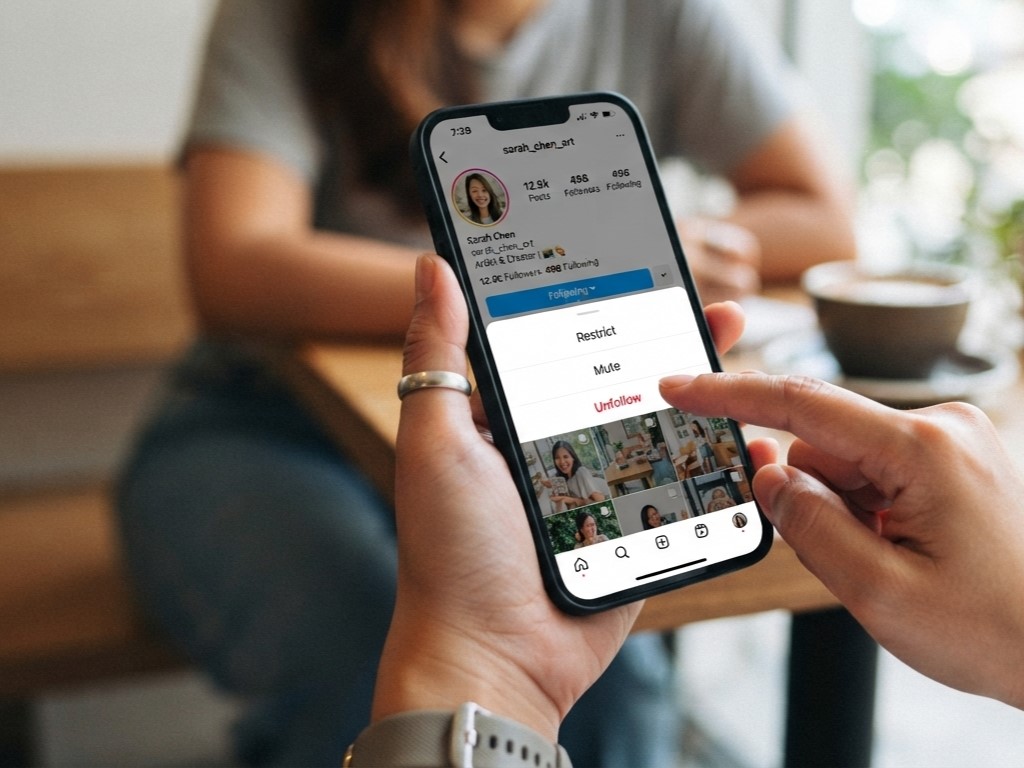
Your Content No Longer Matches Why People Followed You
One of the most common causes of unfollows is a mismatch between what people expected and what an account eventually became.
Imagine someone follows a fitness account because it consistently publishes practical workout ideas. After a few months, the feed becomes mostly supplement promotions, motivational quotes, and unrelated lifestyle content. The account may still be posting regularly, but it is no longer delivering the reason that earned the follow in the first place.
The same thing happens with businesses. A software company might attract followers with troubleshooting tips and product education, then gradually shift toward company announcements and sales messages. A restaurant might build an audience around food photography and local recommendations, then fill its feed with generic promotional graphics.
Before changing your content strategy, identify the original value proposition of the account. Ask:
- What type of content initially attracted our audience?
- What problems do followers expect us to help them solve?
- What topics consistently generate meaningful responses?
- Which content categories have gradually disappeared from our feed?
Then create three to five recurring content pillars. For a marketing agency, those might be practical tips, campaign examples, industry observations, behind-the-scenes content, and client education. Promotions can still have a place, but they should not replace the content that made the account worth following.
This becomes especially important when managing several accounts. A shared content workflow can make publishing easier, but each account still needs a distinct audience and purpose.
Posting Too Much Can Make Good Content Feel Like Noise
Consistency is useful. Volume for the sake of volume is not.
An account can publish technically good content and still lose followers if people repeatedly see it occupying too much of their feed. This is particularly noticeable when several posts communicate essentially the same message.
Consider a local service business publishing five posts in one day: a promotional graphic, a nearly identical promotional graphic, a product photo, another discount announcement, and a reminder about the same offer. None of the individual posts is necessarily terrible. Together, they create fatigue.
A better approach is to judge your publishing frequency against audience response rather than following an arbitrary posting target.
- Review your recent posts over a four- to eight-week period.
- Group them by content type and topic.
- Look for repeated themes that receive progressively weaker responses.
- Compare reach, comments, shares, saves, clicks, and other meaningful actions where those metrics are available.
- Reduce low-value repetition before simply increasing the number of posts.
Also look at the experience of someone following you across multiple platforms. If the exact same message appears on Facebook, Instagram, LinkedIn, and X with no adaptation, the follower may feel as though the account is broadcasting rather than communicating.
For businesses managing multiple profiles, a content calendar should therefore answer two separate questions: What are we publishing? And why should this particular audience want to see it?
Constant Selling Gives Followers Little Reason to Stay
People understand that businesses need to sell. The problem is not promotion itself; it is when nearly every interaction feels like a sales opportunity.
A follower might tolerate an occasional product announcement because the account also provides tutorials, useful ideas, entertainment, inspiration, or access to people behind the brand. Remove everything except the sales messages, and the relationship changes.
Try separating promotional content into a broader content mix. For example, an e-commerce brand could use a weekly cycle that includes a product demonstration, a useful customer tip, an educational post, a customer story, and a promotion. The exact ratio does not need to be universal. What matters is that followers receive value even when they are not ready to buy.
There is another distinction worth making: promotional content can still be useful content. A software company explaining how a feature solves a common problem is more valuable than simply saying, “Our latest feature is now available.” A clothing brand showing three ways to style an item gives followers something to use, rather than simply telling them to purchase it.
When reviewing your engagement tactics, stick to genuine interactions and avoid practices that artificially inflate engagement or repeatedly target people with unwanted commercial messages. Instagram’s community guidelines specifically discourage artificially collecting likes, followers, or shares; repetitive comments or content; and repeated commercial contact without consent.

Irrelevant Content Slowly Erodes Interest
Relevance is not simply about staying within your industry. It is about staying connected to what your particular audience cares about.
A cybersecurity company can talk about password security, phishing, workplace technology, and data protection. But if its feed suddenly becomes a stream of generic inspirational quotes, followers have little reason to associate the account with the expertise they originally wanted.
The same problem appears when businesses chase every trend. A trending format may generate attention, but if it has no meaningful connection to the brand or audience, it can make the account feel inconsistent.
Use your audience’s behavior to decide what deserves more attention. Instead of asking only which posts received the most likes, look for stronger signals of interest:
- Which topics generate thoughtful comments?
- Which posts are shared or saved?
- Which questions repeatedly appear in comments or messages?
- Which posts lead people to visit your website or profile?
- Which content attracts the audience you actually want, rather than simply the largest audience?
Then build future content around those patterns.
It is also worth remembering that social media audiences are not interchangeable. Platform usage varies considerably across demographic groups. For example, Pew Research Center’s 2025 survey found that 80% of U.S. adults ages 18 to 29 reported using Instagram, compared with 19% of adults ages 65 and older. Current research on how different audiences use social platforms illustrates why content decisions should be based on the audience you are actually trying to reach.
Repetitive Content Makes an Account Predictable
Consistency does not mean publishing the same idea in slightly different packaging.
If every Monday is a motivational quote, every Tuesday is a product photo, and every Wednesday is a discount graphic, followers can eventually predict the entire feed. Predictability is particularly damaging when the content itself provides little new information.
Start with a strong topic, then explore it from different angles. A marketing agency discussing email campaigns could publish a checklist, a common mistake, a client scenario, a short tutorial, a myth-versus-fact post, and a breakdown of campaign results. The subject remains consistent while the experience changes.
When managing multiple accounts, keep a simple content audit. Mark each post by topic, format, objective, and performance. After several weeks, patterns become much easier to spot. You may discover that your audience responds strongly to practical examples but ignores generic advice, or that educational posts outperform product announcements.
That information should influence the next content cycle. The goal is not to eliminate formats that perform poorly after one post. It is to identify repeated patterns and adjust accordingly.
Ignoring the Audience Can Be More Damaging Than Low Reach
Social media is not only a publishing channel. It is also a place where customers expect some level of interaction.
That does not mean a business must respond instantly to every comment. It does mean that repeatedly ignoring reasonable questions, feedback, or complaints can weaken the relationship behind the follow.
Set aside dedicated time to review comments and messages. Look for recurring questions that could become future content. If several customers ask how to use the same product feature, create a tutorial. If people repeatedly misunderstand a service, publish an explanation. If customers praise a particular use case, turn that insight into an example.
This creates a useful feedback loop:
- Publish content based on your audience’s needs.
- Monitor the responses and questions it generates.
- Identify recurring interests or problems.
- Turn those insights into new content.
- Measure whether the revised approach improves meaningful engagement.
Instead of constantly guessing what followers want, you allow the audience to help shape the editorial calendar.

Use Unfollows as a Diagnostic Signal
It is easy to treat every unfollow as a failure. That is not always the right interpretation.
Some people will unfollow because their interests change. Others may have followed after a giveaway, promotion, trend, or viral post and were never a strong fit for the account. Losing those followers is not necessarily a problem.
The useful question is whether unfollows increase when something changes in your strategy.
Compare periods before and after major changes such as a new posting schedule, content format, promotional campaign, brand repositioning, or shift in audience. Look for patterns rather than reacting to individual follower losses.
For example, if follower growth is steady but drops noticeably after you begin publishing mostly promotional posts, that is worth investigating. If follower numbers decline slightly after removing low-quality content while engagement from your remaining audience improves, the change may actually be healthy.
Track follower growth alongside reach and engagement rather than treating follower count as the only success metric. An account with a smaller but genuinely interested audience can be more valuable than one with thousands of inactive or poorly matched followers.
Build a Feed People Have a Reason to Keep Following
Keeping followers engaged does not require trying to make every post go viral. It requires consistently giving people a reason to remain interested.
Start by identifying why people followed the account in the first place. Protect that value proposition. Reduce repetitive and overly promotional content. Pay attention to questions and feedback. Test different ways of presenting useful ideas, and use performance data to decide what deserves more attention.
Most importantly, think beyond the next post. A strong social media account is an ongoing experience. When followers repeatedly find information, entertainment, inspiration, or useful interaction, staying becomes the natural choice.
The objective is not to prevent every unfollow. It is to build an account where the people who matter most have plenty of reasons to stay.