For years, social media teams treated TikTok like a slot machine: creators uploaded multiple clips a day, hopped on fleeting audio trends, and prayed the recommendation algorithm would grant them a viral spike. If a video took off, you enjoyed a 48-hour flurry of views before metrics plummeted. If the algorithm bypassed it, your production effort vanished into digital obscurity by Friday.
That viral-or-bust approach is now obsolete. Audience behavior across vertical video platforms has shifted from passive entertainment scrolling to intentional, query-based search. Whether consumers want software comparisons, weekly budget templates, local cafe recommendations, or skincare routines, they increasingly head straight to the search bar. Independent demographic shifts in social media search behavior highlight that younger audiences consistently rely on social video platforms as their primary discovery engine rather than conventional text engines.
For social media managers, marketing agencies, and businesses managing multiple brand profiles, this shift unlocks a sustainable competitive advantage: TikTok Search Engine Optimization (TikTok SEO). Ranking for high-intent search terms converts short-form video from a disposable social post into an evergreen inbound traffic asset. Below is the exact technical blueprint for how TikTok’s multimodal engine indexes content, the four non-negotiable keyword placements required to win top rankings, and how to scale search workflows across multiple profiles.
How TikTok’s Multimodal Algorithm Decodes and Ranks Content
Traditional search engines evaluate static text, sitemaps, and external backlink networks. TikTok operates on a completely different architecture. Because video is dynamic, dense, and visual, TikTok’s neural retrieval system utilizes multimodal indexing to parse every video asset across audio, visual, and textual planes simultaneously.

1. Spoken Audio Transcripts and Natural Language Processing
The moment you publish a video, TikTok’s automated speech recognition (ASR) engine transcribes every spoken word into a machine-readable text stream. Natural language processing models evaluate this transcript to extract entities, topical nouns, and conversational context. If you produce a tutorial explaining automated social posting workflows but never audibly utter those exact words, the algorithm misses a critical indexing signal. Spoken dialogue is not incidental background audio; it is primary indexable copy that anchors your video to a specific topical cluster.
2. Optical Character Recognition (OCR) and Visual Scene Analysis
TikTok does not simply listen to your audio; it visually reads your footage. Optical character recognition scans for text overlays, stickers, and graphic assets rendered across individual video frames. Simultaneously, computer vision models classify physical objects, background environments, and creator actions. If your video reviews an espresso machine, the system visually confirms the physical appliance while cross-referencing your on-screen text banners against what is visible in frame. Authoritative analysis of TikTok recommendation and retrieval mechanics confirms that content relevance scores increase dramatically when on-screen visuals, spoken words, and descriptive metadata reinforce one another without conflicting signals.
3. Query-Specific Engagement and Satisfaction Signals
Multimodal indexing earns your content an evaluation slot, but user engagement dictates sustained rankings. When a searcher executes an in-app query and taps your video, the algorithm tracks immediate satisfaction metrics:
- Query watch duration: Did the searcher watch past the opening hook, or did they bounce immediately back to the search results?
- Completion and replay rates: Did the video provide an exhaustive answer that resolved the user’s inquiry?
- Save-to-search ratio: High bookmark rates indicate reference-level utility, which strongly elevates ranking authority.
The 4 Critical Keyword Placements for Maximum Search Visibility
To secure top search placements, your content must provide unified semantic confirmation across every indexable layer. If your spoken audio discusses client onboarding workflows, but your text overlay reads “secret agency tip,” and your caption contains vague emojis, the algorithm struggles to classify your video. You can eliminate this ambiguity by placing target keywords across four key structural zones.
1. In-Video Title Overlay
Render a clear text overlay stating your target keyword within the first two seconds of playback. Always prioritize TikTok’s native in-app text editor over pre-rendered text from third-party editing tools, as native text feeds directly into the platform’s accessibility and metadata streams. For example, a video targeting “B2B lead generation strategy” should feature an overlay reading “B2B Lead Generation Strategy (Step-by-Step)” rather than generic phrasing like “How I Get Clients.” Position the text within the safe viewing zone to prevent platform UI buttons from covering your keywords.
2. The First 3 Seconds of Your Spoken Script
State your primary target keyword phrase verbatim within your opening sentence. Vocalizing the core query immediately hooks searchers while providing the automated transcript engine with an unambiguous opening thesis. Instead of starting with conversational filler like “What is up guys, today we are talking about growth,” start directly with the query: “If you need a reliable B2B lead generation strategy that scales without cold calling, here is the exact framework we use.”
3. The Expanded Caption Body
TikTok’s expanded 2,200-character description field allows creators to publish rich, searchable summaries alongside their video assets. Use this space to write a structured overview of your topic, integrating secondary keywords, technical terms, and step-by-step takeaways. When managing multiple accounts across distinct verticals, drafting comprehensive, search-optimized copy manually can create operational bottlenecks. Using a dedicated TikTok Caption Builder allows social media teams to generate keyword-rich descriptions, format contextual timestamps, and maintain consistent copy quality across multiple profiles in minutes.
4. Hashtag Anchors (The 3-to-5 Rule)
Avoid stuffing captions with dozens of broad tags like #fyp or #foryou, which dilute topical focus. Instead, deploy a deliberate cluster of three to five tags that reinforce content hierarchy:
- One broad vertical tag: Categorizes your overall industry (e.g., #digitalmarketing).
- Two specific keyword tags: Mirrors your explicit search target (e.g., #leadgeneration and #b2bmarketing).
- One community or persona tag: Reaches your intended audience segment (e.g., #agencyowner).

Mining TikTok Search Suggestions and “Others Searched For” Bubbles
Effective keyword research on TikTok does not require expensive third-party database software. The platform displays real-time search volume and user demand directly within its native interface. By systematically harvesting these predictive search signals, you can uncover unmet search queries with high purchase intent before your competitors notice them.
1. Predictive Auto-Complete in the Search Field
Open the TikTok search bar and type your core topic—for instance, “email marketing.” Before pressing enter, observe the auto-complete dropdown. These suggestions reflect real-time query volume and query velocity across the platform. You will frequently uncover long-tail queries such as “email marketing for ecommerce” or “email marketing sequence examples.” Each auto-complete prompt represents a verified content opportunity backed by existing audience demand.
2. “Others Searched For” Recommendation Pills
After running a search, scroll through the initial results to locate the horizontal suggestion pills labeled “Others searched for.” These bubbles indicate query refinement pathways. When searchers fail to find what they need on their first attempt, TikTok presents these secondary prompts to guide their journey. Understanding these foundational principles of TikTok keyword visibility enables marketers to address unanswered customer questions and build content clusters that capture buyers at varying stages of consideration.
3. The Comment Section Search Bar
Examine the comment section of high-performing videos within your niche. When TikTok detects that a clip addresses an established search topic, it frequently places a blue clickable search query at the top of the comment feed. If an identical blue search phrase appears repeatedly across different creators in your space, that phrase is an algorithmic entity. Treat that phrase as an immediate green light to create a dedicated, definitive video addressing that exact topic.
Cracking Universal Search: How to Rank TikTok Videos in Google SERPs
TikTok SEO is no longer confined to the mobile application. Google now indexes short-form video content directly into standard desktop and mobile search results, featuring TikTok clips in “Short Videos” carousels, dedicated video panels, and featured snippets. Ranking a single video can simultaneously generate inbound views within TikTok and capture high-intent organic traffic from Google’s global search engine.
Google crawls public TikTok URLs, reading video descriptions, account entities, closed captions, and schema metadata. When a web user searches for quick how-to tutorials or product demonstrations, Google frequently prioritizes short vertical videos over traditional long-form blog articles.
To optimize your TikTok content for Google indexing, implement these tactical steps:
- Frame captions around question-based queries: Use direct headings like “How to clean a mechanical keyboard” or “Best budget microphone for podcasting” that align with standard Google search queries.
- Structure descriptions with sequential steps: Numbered summaries and bullet lists in your caption body give web crawlers clear contextual text to extract into search snippets.
- Keep your profile and videos public: Ensure your profile privacy settings allow web suggestion and external search indexing.
- Embed videos within relevant website content: Embedding your top TikTok tutorials into authoritative blog posts on your company website provides search engines with external contextual links that reinforce topical authority.

Operationalizing TikTok SEO: A Multi-Account Workflow for Agencies and Brands
Applying SEO best practices to one TikTok profile is straightforward. Executing that strategy consistently across ten, twenty, or fifty client accounts requires a standardized operating system. Without documented workflows, multi-account management quickly collapses into inconsistent posting schedules and missed keyword opportunities.
1. Build a Centralized Keyword Matrix
Create a shared master database mapping your brand’s core offerings into distinct content pillars. Under each pillar, record primary target keywords, secondary long-tail variations, and current top-ranking competitor videos. Regularly update this matrix with newly discovered auto-complete prompts and search bubbles to keep your content calendar aligned with shifting consumer demand.
2. Implement Standardized Pre-Production Briefs
Equip creators and production teams with standardized scripting templates before recording begins. Every brief should outline:
- The mandatory opening hook sentence containing the primary spoken keyword.
- Exact on-screen text overlays to be placed in the first two seconds.
- A bulleted list of secondary concepts to address in the body of the video.
- Approved hashtag clusters and caption summaries.
3. Streamline Multi-Profile Publishing and Monitoring
Publishing across multiple client accounts without operational friction or account flags requires dedicated infrastructure. Incorporating a robust TikTok growth tool allows social media managers to coordinate publishing schedules, automate profile engagement workflows, and maintain consistent output across multiple brands safely. Maintaining consistent activity across profiles signals platform trust, ensuring your search-optimized videos receive immediate algorithmic evaluation without manual bottlenecks.
Measuring TikTok Search Performance and Core KPIs
Measuring the success of your TikTok SEO strategy requires looking past raw view counts. To determine whether your content is generating sustainable inbound search traffic, analyze three core metrics inside your TikTok Analytics dashboard.
1. Traffic Source Distribution
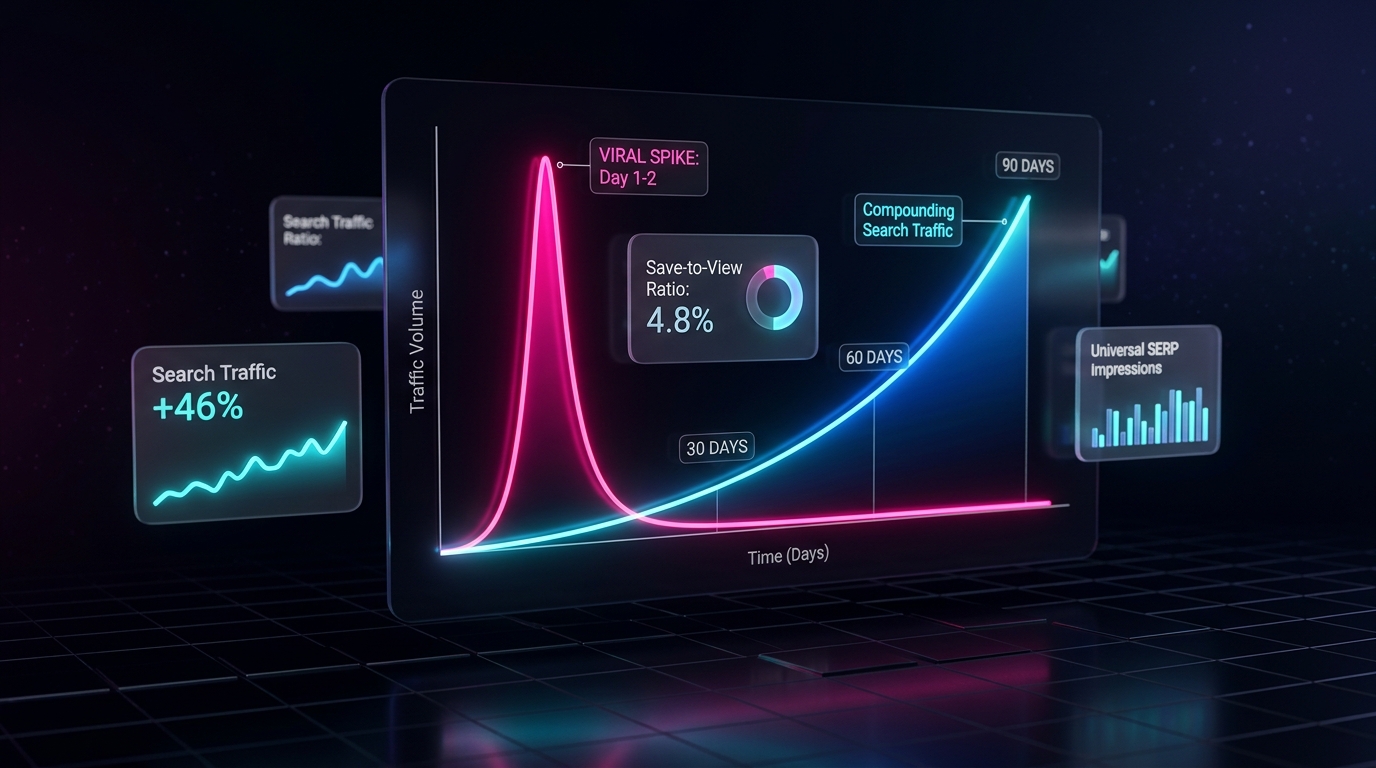
Open the analytics tab for individual videos and examine the “Traffic Sources” breakdown. While a viral video generates 90% or more of its views from the “For You” feed during the first 48 hours, an SEO-optimized video displays a fundamentally different traffic pattern. Over several weeks, the “Search” traffic percentage steadily climbs, often accounting for 25% to 50% or more of ongoing views. This steady search percentage confirms that your video has secured a durable ranking position.
2. Search Queries Report
Review the “Search Queries” section at the bottom of the video performance tab. This report displays the exact phrases users typed into the search bar before viewing your content. Compare these incoming terms against your original keyword matrix. If viewers are discovering your content through adjacent long-tail terms, use those insights to develop targeted spin-off videos that capture the remaining market share.
3. The Save-to-View Ratio
While likes indicate passive approval, saves demonstrate practical utility. Viewers save content they intend to reference later—such as step-by-step guides, resource roundups, and instructional walkthroughs. A save-to-view ratio above 3% indicates high viewer satisfaction, which strongly protects your ranking against competing uploads over time.
Shifting from Fleeting Virality to Compounding Discovery
Chasing algorithmic virality on TikTok is an unpredictable, high-stress endeavor. Trends expire in days, recommendation feeds fluctuate without notice, and short-lived view spikes rarely build predictable pipeline value for businesses or clients.
TikTok SEO provides a dependable, high-yield alternative. By aligning your content production with how the multimodal algorithm extracts spoken audio, on-screen text, and caption metadata, you turn short-form video into an engine for long-term customer discovery. Instead of asking what ephemeral trend your team should chase this week, identify what specific solutions your prospective customers are typing into the search bar right now. Optimize for those intent-driven queries, deploy clean keyword structures across every video layer, and build a library of compounding search assets that deliver qualified traffic for months to come.