This companion guide covers 41 software directories and launch platforms we checked while researching places to introduce SMTasker. It focuses on the conditions that can decide whether a free route works for your product, including badge placement, backlink verification and launch queues.
Each entry keeps its original screenshots and practical submission notes. The examples reflect what we saw in November 2026. Check the current form before committing to a placement or planning around a launch date.
Read Part 1 for the launch guide and more directories →
1. Fazier

Fazier combines daily product discovery with a community launch format. Its front page separates today’s products, yesterday’s launches, and leading products from earlier periods, so a listing sits within an active stream rather than only an alphabetical catalog. The range is broad: SaaS, utilities, creative applications, and other independent products appear together. It is a sensible research stop when your product has a clear, easily demonstrated benefit that another maker can understand quickly.
The free Basic route we checked required more than a product description. It included a badge, an English-language website, a positive domain rating, and three useful comments on other products. Those comments should contribute something specific, such as a question about a workflow or feedback based on a real demonstration. Budget time for participation before planning a launch date.
Prepare a concise explanation of the problem solved and a screenshot that remains understandable at thumbnail size. For a social media product, describe the actual publishing or account-management workflow rather than promising followers. Fazier’s community exposure can be valuable, but neither votes nor acceptance establish commercial results.
2. Findly.tools

Findly.tools brings software discovery into one catalog with categories including AI, productivity, marketing, SEO, automation, development, design, and analytics. Its homepage also shows recent tools and deals, giving buyers several ways to browse beyond a single launch ranking. That breadth can suit a product that crosses categories, provided its description explains one primary use case instead of trying to appear relevant to every visitor.
The submission process we examined allowed a draft with descriptions, audiences, pricing information, and platform details. Publication on the free route was gated by a badge in the website footer. An account and a completed draft therefore do not mean a product is publicly listed. Save the draft identifier and return to the listing step after installing the required reference; check what the verifier accepts before treating a text link as a substitute for the badge.
For social media software, the marketing and automation categories are useful places to compare descriptions. Explain whether the product is web based, desktop assisted, or device dependent, and label a time-limited trial accurately. A tidy profile with realistic setup details gives a buyer more to work with than a long list of unsupported benefits.
3. Turbo0

Turbo0 focuses its discovery experience on content-creation products. Its categories include video and audio editing, image resources, screen recording, typography, copywriting, website creation, management, and growth. This gives it a particularly relevant angle for tools used by creators and social media teams, even though the catalog also contains broader utilities. Product cards display practical labels such as platform and pricing, which can help a visitor decide what to investigate.
The free submission route checked for a domain rating above ten and a backlink or badge. The draft flow included an introduction and cover image before a verification step, so it is worth preparing those assets before beginning. A successful domain-rating check is only one prerequisite; the badge can still be reported missing and leave publication incomplete. The current verifier inspects the product homepage and looks for the badge or the exact Turbo0 item link; it does not offer a separate backlink-page field.
Use a cover that shows the product doing a recognizable task rather than presenting a vague promotional slogan. If your application coordinates content or manages publishing, describe how it fits alongside creation tools. Recheck the review estimate and accepted backlink location in the current form. Turbo0’s audience positioning is relevant, but listing there does not guarantee campaign reach or creator adoption.
4. ShowMeBest.AI

ShowMeBest.AI organizes AI tools around productivity, business, and creative work. Its homepage combines category browsing, search suggestions, AI news, and featured entries. It can be a useful place to research how different tools describe the same need, especially when your application spans content production, marketing, or an assistant-based workflow. The visible catalog is broader than social media alone, so relevance depends on selecting an accurate category.
The free submission route we reviewed explicitly requested a badge or link in the website footer. That is an important distinction: an article mentioning the directory does not automatically satisfy a footer requirement. The review timing displayed on the actual submission page ranged from seventy-two hours to several weeks, illustrating why a third-party directory list should not be treated as the final promise of publication speed.
Prepare a short description that explains what the AI actually changes for a user. A content tool might emphasize editing or ideation; an automation tool should identify the routine it supports. Consider the surrounding featured placements when evaluating brand fit, and record the final public page only after approval rather than counting the initial form as a live listing.
5. Smol Launch

Smol Launch is structured around weekly product launches, with product pages, guides, and a board for the current week. Its visible mix includes design tools, content applications, developer products, and other small software businesses. The weekly rhythm makes it useful for a coordinated launch: a founder can prepare a demonstration and a small set of social posts around a specific period instead of treating submission as an isolated administrative task.
The free flow we checked required a homepage badge and five votes during the current week, alongside a limited number of weekly places. A product draft can exist before those conditions are completed. A blog article is therefore useful as a resource for readers but does not replace the stated homepage badge. Community votes should reflect a real assessment of the products, and any additional public participation needs to be considered separately.
Use the product page to explain one audience and one strong use case. If the launch is aimed at agencies, show an agency workflow rather than a generic feature collage. Watch the available launch week and distinguish an approved submission from a scheduled or already published product.
6. Submit AI Tools
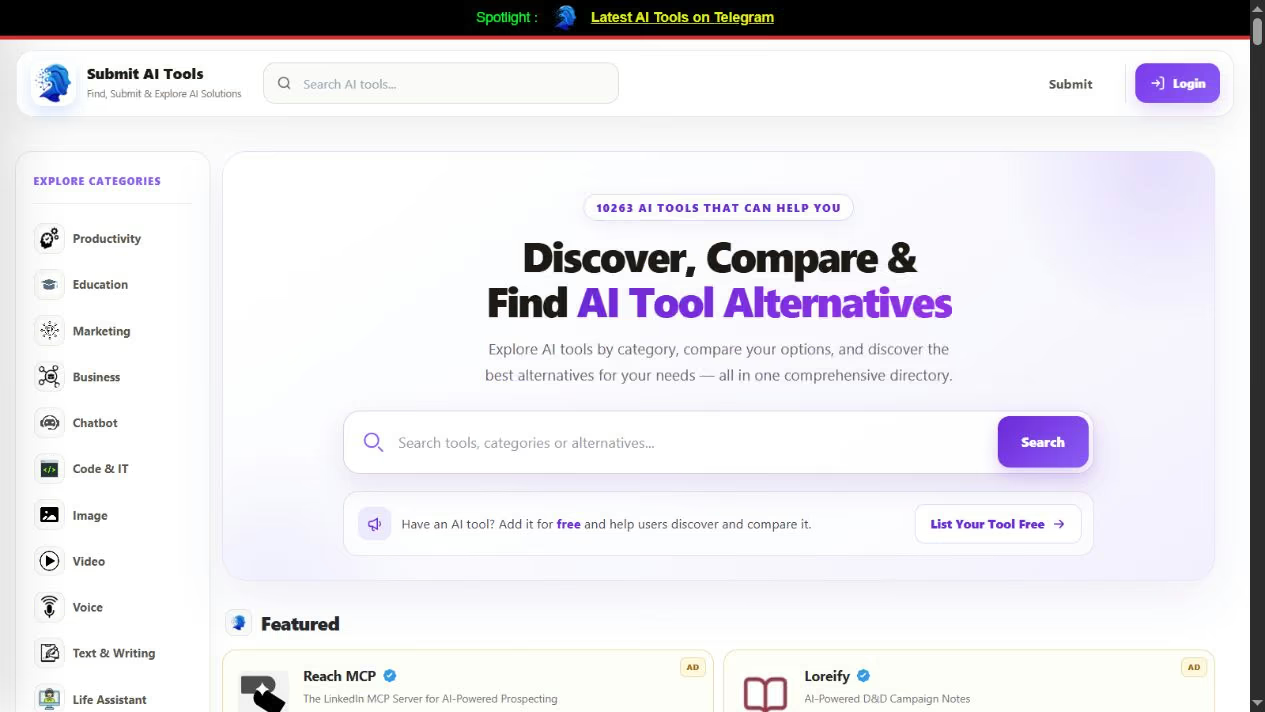
Submit AI Tools is a category-based AI directory with search, comparisons, alternatives, deals, and profession-oriented discovery. Its navigation covers marketing, business, productivity, image, video, writing, coding, and several other AI use cases. That organization gives a product multiple relevant research contexts, but the best submission still begins with the task a user is trying to complete, not with the largest possible collection of category labels.
The free route required authentication and a verified backlink that remains in place. The submission page indicated a review period of five business days when we checked it. Human verification may also appear in the process. These steps should be completed through the normal interface, and a successful login should not be confused with successful product submission. Preserve any confirmation and the eventual public profile URL in your launch record.
A social media application can be relevant when it has a genuine AI or marketing workflow to describe. Include the pricing model, supported platforms, and any account or device requirement. The directory’s alternatives angle also makes a precise differentiator useful: explain a concrete operational distinction instead of claiming to be universally better than other tools.
7. ToolFame

ToolFame presents a broad online-tools catalog rather than restricting discovery to one kind of AI application. Its homepage includes social media, content creation, development, productivity, marketing, SEO, and many other categories. This makes it suitable for researching products that sit between workflows, such as software used to create assets and then organize marketing activity. It also means a visitor’s intent can vary widely across the site.
The free route we examined required a minimum domain rating of ten and a badge that is verified and retained. Its advertised review window extended as far as one hundred eighty days, so this is better treated as a long-term distribution task than an urgent launch dependency. A completed form may enter a queue rather than produce an immediate public page. Check current terms and verification behavior before promising a date to your team.
Choose a category that reflects the buyer’s main reason to use your product. For social media software, a clear workflow explanation and a realistic trial label are more informative than repeating the directory’s traffic statistics. Keep the badge obligation in your website-maintenance notes so a later redesign does not accidentally affect the listing.
8. LaunchIgniter

LaunchIgniter combines product launches with a maker-oriented community and ongoing posts. The homepage emphasizes early users and feedback, showing featured products alongside recent launches and discussions. Its mix of applications and business tools makes it a possible fit for a SaaS product with a focused explanation and a founder who can answer practical questions. The community context is worth considering alongside the directory page itself.
The free route we checked required manual review, a badge on the product homepage, and votes for at least five different products on the day of submission, measured in UTC. Followed-link treatment was linked to finishing among the top three. The first free week shown during our November check was in May 2027, with timing subject to availability. These are substantial participation and scheduling conditions; read the actual free-plan details before planning a campaign.
Prepare a launch message built around a real problem, and make the website ready for visitors who have never heard of the product. A social media team could support the launch with a short demo and an explanation of a repeatable workflow. Evaluate any feedback and referral activity separately from the ranking position; each tells a different part of the story.
9. DeepLaunch

DeepLaunch is a tools-and-resources directory with a broad software category system, including content creation, social media, automation, analytics, development, and AI. Its homepage distinguishes paid featured placements and also points visitors toward a backlink research library. For a founder, the useful starting point is still the catalog itself: inspect the categories and product descriptions to determine whether someone browsing there could reasonably need your tool.
The free submission option we checked required a followed badge and recurring verification, with a limited number of free places each day. The flow also involved selecting a launch date. This means that adding a link is only part of the task; the date, available capacity, and ongoing visibility of the badge matter too. Reconfirm these conditions in the current form before scheduling supporting marketing work.
A product profile should describe a repeatable job and the audience that performs it. For a social media team, that might be preparing a publishing routine or reviewing campaign activity. Do not borrow the site’s claims about reach as your own forecast. Judge the listing by relevant visits and useful conversations after it becomes public.
10. ScrollLaunch

ScrollLaunch is a weekly launch platform with product pages, past-week archives, maker profiles, and category discovery. The homepage explains its current-week leaderboard and distinguishes premium placement from other entries. Its permanent product pages can provide a reference after launch week, while the weekly board creates a specific moment around which to plan outreach. Products for creators, marketers, and small software teams can fit if their use case is clear.
The free path allowed an imported draft but required a badge in the server-rendered homepage HTML, such as a footer or an appropriate featured-on block. The verifier did not offer a separate article-page field. Free weeks had limited capacity; the first shown during our November check was in January 2027. The account flow also included a newsletter subscription. Review imported fields and the selected plan carefully, because paid upgrades were prominently presented.
A useful social launch can connect a product demonstration, the directory page, and an explanatory post on your own channels. Do not interpret the site’s claims about AI search discovery as a guarantee of citations. Record the confirmed launch week and public profile, then measure relevant referral visits after publication.
11. SaaSFame

SaaSFame is a software catalog with a wide category system, from marketing and analytics to development, support, finance, and productivity. Its homepage shows featured products and practical labels such as platform and pricing. That makes it a possible research destination for recurring-use software with a clear buyer, rather than only for an application launched this week. Compare the categories before deciding where the product belongs.
The free plan required a domain rating of at least ten and a badge that is verified and kept on the website. Its review window could reach one hundred eighty days. In the form we tested, the verifier used the fixed product homepage and did not offer a separate field for an editorial article. The article link was not detected. Treat this as a long-term task and resolve the placement requirement before promising a publication date.
Use the description to explain the recurring job your software performs and any setup dependencies. A social media application should identify the supported work and the intended user, such as a solo operator or agency. Keep the badge requirement visible in maintenance notes, and evaluate the resulting profile on referral quality rather than catalog size alone.
12. AI Directories

AI Directories combines an AI-tool discovery offering with a separate service that submits products to other directories. The homepage emphasizes the submission service, so take care to distinguish buying a distribution package from adding a single tool to its own catalog. The AI tools and marketplace navigation provide the more relevant starting points when you are researching an individual product listing.
The free tool-submission option we checked required a backlink on the homepage or in the footer and a domain rating above ten. Its stated review period was seventy-two hours. An editorial article can help readers discover the platform, but it does not by itself satisfy a homepage-or-footer rule. Revisit the tool-submission pricing tab and the current verification step before proceeding; service pricing elsewhere on the site refers to a different offer.
This can be relevant for an AI product with a specific business use case and a clear website. For social media software, explain the assistant’s practical role without implying unrestricted autonomy. Evaluate any paid submission service separately, considering its destinations, reporting, and what happens when third-party directories reject or delay a product.
13. The Launch Directory

The Launch Directory presents startup discovery in an editorial, dated-record format. Its homepage is organized into weekly editions, sections, founders, and an archive, giving the experience a different feel from a conventional grid of software cards. A permanent product record can be useful when someone wants a compact explanation of a company after the original launch conversation has passed. The site includes both software and broader startup offerings.
The free submission route we reviewed required automatic badge verification and a completed founder profile. It described a review queue and a nofollow link by default, with paid alternatives offered separately. These details matter because a badge obligation does not necessarily mean the free profile returns a followed link. Confirm the current relationship and accepted badge location before choosing the route for SEO reasons.
Write the entry as a clear record: who the product serves, what changed or launched, and where a visitor can learn more. For social media products, a concrete operational example works better than a generic growth claim. The archive may support long-term reference, but discoverability and conversions still depend on relevance and the quality of the destination website.
Explore The Launch Directory →Back to the directory index ↑
14. ToolDirs

ToolDirs is a curated tools and SaaS directory with search, category browsing, featured products, and recent additions. Its categories span AI, design, development, marketing, education, and other software workflows. The homepage gives each tool a short description, making the clarity of a submission particularly important. A visitor should be able to understand the job performed before opening the full product site.
The free plan we checked explicitly required a followed backlink in the website footer and indicated a two-day review period. A text reference within a blog post is a different placement and should not be represented as meeting that footer condition. Paid options were separate. Reconfirm the current instructions and keep the exact badge or link markup available if the directory supplies one.
A useful submission avoids stacking unrelated benefits. Describe one buyer, the task they perform, and the way the product helps. Social media teams can use the marketing or automation context to explain a concrete publishing routine. After approval, verify that the product name, website URL, pricing model, and public profile are correct. Those details matter more to a prospective customer than an unverified promise of backlink value.
15. Uno Directory

Uno Directory covers AI, SaaS, productivity, business, development, marketing, and creative tools. Its homepage provides category browsing, sorting, recent entries, and links to partner launch platforms. That makes it useful for exploring a broader software landscape and comparing how a product appears among adjacent solutions. The partner-platform section is a separate discovery aid, not a guarantee that one submission distributes a product everywhere.
The free submission guide we checked explicitly asked for a visible badge on the homepage. It also described automatic verification. A standalone blog guide does not replace that placement, even when it links to Uno clearly. Before submitting, check that the chosen plan, badge markup, and website address match the live instructions. Keep the distinction between the destination product URL and any backlink verification page.
For a marketing or social media application, choose categories based on current capabilities and show a representative workflow. Describe platform requirements and any paid trial conditions accurately. Uno’s broad catalog may help people discover alternatives, but the useful outcome is a relevant visitor understanding your product, not simply adding another directory name to a report.
16. First Look

First Look focuses on emerging AI tools and SaaS, with categories including content creation, social media, automation, developer tools, design, and analytics. Its homepage combines featured entries with newer products and offers additional discovery paths such as open source, affiliates, and discounts. It is a useful place to compare how early software products present their main use case and the information a visitor sees before clicking through.
The free route required a followed badge, a seven-day review period, and weekly verification. Removing the badge could change the product link to nofollow. Our completed form could be reviewed and the free option selected, but its server did not find the link from this separate article. No independent backlink-page field was offered. Record that result rather than treating an ordinary same-domain reference as proof of accepted placement.
Imported product details should be reviewed carefully, particularly pricing and platform support. For social media software, show the workflow and explain what requires human review. A clear profile can introduce a product effectively, but the directory’s early-discovery positioning should be assessed through actual referral quality after publication.
17. Huzzler

Huzzler combines a SaaS launch feed with reviews, advertising, and a backlink-network offering. Its homepage displays recent products and boosted placements across categories such as marketing, productivity, ecommerce, and AI. The product mix can be relevant to a small software business, but the launch directory and additional promotion services should be evaluated separately. Their costs, obligations, and likely audiences are not identical.
The free route we checked required a homepage badge, checked daily while the product remained in a lengthy queue. The instructions indicated that removing the badge could remove the product from that queue. The free product page also carried a noindex condition when reviewed. That substantially changes the value proposition if your main goal is search visibility; a public page and an indexed page are not the same thing.
Check the current rules before committing website space or launch effort. A social media product should still prepare a useful explanation and screenshot, but avoid assuming that every launch page will support organic search discovery. Judge whether the audience, referral potential, and maintenance obligation justify the work independently of the headline backlink claims.
18. ufind.best

ufind.best offers software discovery through categories, weekly launches, product rankings, and domain-related tools. Its homepage includes productivity, marketing, content creation, business, design, and AI products. The weekly format can suit a small product launch with a concise demonstration, while the broader catalog provides a reference outside the launch period. Examine how ranking works before deciding what a particular position actually means.
The free route required a badge on the product homepage before confirming a launch week. Its verifier rendered JavaScript and explicitly reported that the homepage badge was absent when only our separate article linked to the directory. The first free week shown in November was in March 2027. Followed-link treatment was limited to the top three. Check imports carefully too: our website import initially described a bot-verification screen instead of the product.
A useful listing starts with one problem and one audience. For a social media application, identify the workflow and supported environment rather than promising generalized growth. Evaluate the final profile on the visitors and feedback it produces. A ranking can be interesting community evidence, but it should not be substituted for measured trial activity or a clear understanding of the buyer.
19. NavFolders

NavFolders presents tools and websites through curated collections, categories, tags, and sorting controls. Its homepage includes business, productivity, image, video, writing, AI, design, templates, and other topics. This broader scope can fit both software products and useful online resources, provided the category genuinely matches the offering. The visible filters also make precise labels useful: they help a visitor narrow a general catalog to a relevant task.
The free plan we checked explicitly requested a badge in the website footer before submission, with a stated seventy-two-hour review period. Without the badge, the product would not enter review. A link inside this article is helpful for navigation but should not be claimed as a footer placement. Recheck the exact markup and live plan instructions before completing the form.
Prepare a product description that explains what someone can accomplish and what they need to begin. A social media team could focus on content organization or repeatable publishing work rather than a broad list of actions. After publication, inspect the category, tags, screenshots, and destination URL. Those practical details determine whether the profile makes sense to a first-time visitor.
20. AI Tool Trek

AI Tool Trek organizes AI discovery around tasks including text, image, video, coding, business, marketing, chatbots, and productivity. Its homepage includes recently launched tools and an AI-news route, giving visitors both catalog browsing and a view of newer applications. It can be relevant to an AI-enabled product that performs a clearly defined job, particularly if the description makes the audience and expected output easy to recognize.
The Free Pack instructions we checked explicitly required a homepage link. They indicated review within seventy-two hours and listing within fifteen days, with removal possible if the backlink disappeared. Those conditions make the placement and maintenance obligation important. An article reference can help readers while still failing the homepage requirement. Recheck the actual form and any supplied badge before submitting.
Prepare a practical explanation rather than a list of AI buzzwords. For social media software, distinguish assistance with settings or content from the execution of actions on supported platforms. Include the pricing model and setup requirements. When the product becomes public, verify the destination URL and category, then assess whether the directory sends visitors who understand and need the workflow.
21. Launchtory

Launchtory currently presents itself as a directory of new AI tools and niche software, with projects, topics, and technology stacks. Its homepage explains that entries can include pricing, platform, signup requirements, and launch dates. That emphasis is useful for buyers who want to understand practical differences before opening several product websites. It is a good positioning exercise: can a visitor quickly tell whether the product fits their environment?
Our earlier submission research found a free route tied to verification of a link from the product website, without a guaranteed review date. The homepage now foregrounds paid listing and spotlight options, so verify that the free route is still available before investing time in it. Do not assume an older free-plan note overrides the current form or that paid sponsorship comes with a basic listing.
For a social media application, make platform support and required setup explicit. Explain what the tool actually does and identify the buyer who needs it. Launchtory’s detailed product framing can be useful as competitor research too. Judge any eventual listing on accurate presentation and relevant visitors rather than the presence of a backlink alone.
22. Launch Vault

Launch Vault combines a startup launch board with product discovery, maker-oriented content, and a separate paid review offering. Its homepage includes weekly launches and information about its newsletter. This can be relevant to software that benefits from a concise launch story and a clear demonstration. Keep the different offers separate: a basic submission does not automatically include hands-on testing, a full review article, or newsletter placement.
The free route we checked limited weekly places and required badge verification before scheduling. Followed links were associated with ranking and badge conditions rather than being an unconditional benefit for every free entry. Recheck the available week and current plan wording before planning your announcement. A draft, a reserved slot, and a published product are distinct milestones.
Prepare a useful description of the core task and intended customer. For social media software, a short walkthrough communicates more than a collage of growth slogans. If considering the separate review service later, assess its deliverables and editorial approach independently. For the free listing, track the final public page and actual referral activity, then compare useful visits with the time spent preparing and maintaining the profile.
23. SaaSGrow

SaaSGrow is built around startups growing in public, with a directory, posts, a leaderboard, and category browsing. Its homepage explicitly invites founders to share wins, failures, and lessons. That makes the platform interesting when your team has useful operating experience to discuss, rather than only a launch announcement. The product mix includes productivity and business software alongside other focused applications.
The free route we reviewed required badge verification before approval and included a startup profile and timeline. Those features suggest an ongoing presence rather than a single launch-day card. Confirm where the badge must appear and what the verifier checks before relying on a resource article. Keep public progress updates accurate and avoid presenting a saved profile as approved until the platform confirms it.
A social media business can use this context to explain decisions about workflows, onboarding, or a new capability, using public information and real lessons. There is no need to publish customer data or private financial details to make an update useful. Evaluate whether participation produces relevant conversations and returning visitors, not only a larger number of places where the company name appears.
24. Startup Trusted

Startup Trusted is a startup database with featured entries, recent listings, and categories. Its visible product mix includes business services, software, creative tools, and specialized applications. The broad scope can be useful for a business that does not fit neatly into an AI-only directory. A clear explanation of the customer and use case is essential because visitors may arrive with very different needs.
The free route we reviewed required automatic badge verification before manual review. Paid visibility options were separate. The platform’s name and verification language should not substitute for your own product evidence; check what its screening covers before making any trust claim based on the listing. Confirm the badge location and current submission requirements directly.
For a social media product, explain the workflow, supported platforms, and practical setup requirements. Use a public business contact and screenshots containing sample data. The profile can be another place to discover the company, but it does not establish performance results or certify every product claim. Review the final page and track the visitors and inquiries it generates. Compare those results with the work required to keep the entry accurate.
25. DodoDirectory

DodoDirectory covers business websites and software across a broad set of categories. Its homepage includes SaaS, startups, marketing, automation, social media, professional services, and local businesses, alongside specialized topics. That breadth makes it a possible fit for products or services outside a narrowly defined launch board. Choose the category where a prospective customer would reasonably look for your offering.
The free plan we reviewed required a permanent badge or backlink and described a two-week review period. The rules stated that removing the reference could cause immediate delisting. Keep that obligation with website maintenance notes, particularly before redesigning a footer or reorganizing resources. Verify the accepted location and markup rather than assuming any mention on the domain will pass.
Write an introduction centered on one buyer and one practical problem. A social media business might explain its account-management workflow or the kind of team it serves. Avoid unrelated categories merely because they are available. After approval, check the public description and link, then judge whether the profile attracts visitors with a real reason to explore the product. Record those outcomes alongside the original submission date.
26. SubmitMySaas

SubmitMySaas combines SaaS discovery with weekly product launches, categories, voting, and earlier launch periods. Its homepage features business, developer, productivity, and AI applications. That format can suit a small software product with a clear launch message and specific customer. The weekly context helps coordinate a demonstration and social announcements, but a confirmed slot is needed before dates are treated as fixed.
The free route we checked required verification of a homepage badge before a slot could be reserved. It limited free launches each week and explicitly did not offer a badge-free zero-cost listing, even with a nofollow link. An article reference cannot be assumed to replace that requirement. Revisit current availability and verification instructions before completing the submission.
A social media product should explain a practical recurring task and the setup a customer needs. Use a relevant screenshot and truthful trial label. Separate the free launch from premium promotion or sponsorship, and record the public profile after publication. The useful outcome is a new visitor understanding the product, not simply collecting a launch-board badge. Follow up on relevant questions while the launch is active.
27. LaunchKiwi

LaunchKiwi is a weekly discovery platform for independent projects and startup launches. Its homepage offers current, past-week, and past-month views, alongside reviews, a newsletter, and paid advertising. The positioning is suitable for small software aimed at early adopters, designers, developers, or other makers. A clear explanation of what the product does is more useful than relying on the platform’s overall audience headline.
The free plan we checked required badge verification, with featured and premium options offered separately. Some homepage language emphasizes fast publication, so inspect the actual free submission step before assuming speed applies without conditions. Confirm what the verifier accepts and whether an editorial article is sufficient; a general website mention is not proof of eligibility.
For a social media tool, demonstrate one recognizable workflow and explain the intended team or operator. Prepare the logo, pricing model, and supported-platform details before starting. After the listing is live, compare relevant referrals and trial activity with the effort involved. Keep sponsored placements separate from community discovery when interpreting traffic and rankings. Check the public page for imported errors before using it in an announcement.
28. SumoDir

SumoDir is a business, SaaS, and startup directory with categories extending beyond software into services and professional businesses. Its homepage includes reviews and browsing by tags. That scope can fit a product-led company or a service business with an accurate category match. The broad audience makes a precise opening sentence important: identify who the offering serves and the problem it addresses.
The Free Listing option we reviewed required a backlink to SumoDir, described a two-week review period, and limited the description to fifteen hundred characters. Premium listing and review-article options were separate. Check the current verification and accepted page location before submitting a resource-page URL. Record the selected plan so a later reviewer can distinguish free submission from paid promotion.
A social media agency or software product should avoid describing itself as both unless accurate. Explain the service or workflow concretely, include a public contact, and use an appropriate image. After publication, review the wording and destination link, then measure useful inquiries or relevant visits. The business-directory scope does not guarantee qualified leads; the quality of the category match still matters.
29. MarketingDB

MarketingDB is a product-launch discovery site with launches, founders, a feed, reviews, and rankings from different periods. Despite its name, its visible product mix extends beyond marketing into design, education, mobile apps, and other software. This makes it useful for researching how small products are introduced to a maker audience, while a marketing tool can explain a particularly relevant use case.
The free route we checked required a live badge before launch, with several weeks of review and recurring checks afterward. Footer placement was accepted, and the verifier displayed the product’s homepage as the inspected page. A blog article may remain invisible to that check even when it contains a valid link. Confirm current behavior instead of changing the canonical product URL to force a pass.
Review imported descriptions and screenshots before saving a draft. For social media software, describe a real workflow and intended customer. Coordinate announcements with the confirmed publication date, then assess referrals and useful feedback. The founder feed can support a conversation, but a completed form differs from a published launch. Keep that distinction visible in your distribution report.
30. LiftOff

LiftOff is a maker-oriented launch board built around daily, weekly, and monthly discovery. Its homepage has a distinctive editorial appearance, a current leaderboard, featured products, and a record of earlier winners. The visible mix includes photography, developer tools, AI applications, and other focused products. That can suit a small launch with a simple explanation and a founder available to respond to relevant questions.
The free plan we reviewed required displaying a badge on the website. Followed-link benefits were limited to the top five products of the day rather than promised to every free entry. Confirm the current rules and accepted placement before treating a backlink inside an article as sufficient. A place on the board and a particular link treatment are separate conditions.
Timing matters on a daily board. Make the landing page and product demonstration ready before choosing a date, then support the launch with a useful message to the right audience. A social post can explain the problem behind the product without asking people to manufacture enthusiasm. Evaluate the questions and relevant referrals the launch creates, not only the final ranking.
31. Postmake

Postmake is a curated resource collection for building and growing a business. Its homepage organizes tools around productivity, design, development, marketing, launch, growth, and AI, with more specific tags beneath them. This task-based roadmap can be useful for a product that fits naturally into a working process. A founder can also use it to research adjacent tools that customers might already have in their stack.
The free Badge Listing route we checked required a Postmake badge to remain visible on the website while the listing is public. Other paid listing and spotlight offers were separate. Confirm the accepted location and any exact badge markup before submitting, particularly if you want to use a resource article rather than a footer. Record the maintenance obligation so a later redesign does not accidentally remove the reference.
Position the product in the workflow it serves. For example, explain whether it helps prepare assets, publish content, collect feedback, or analyze results. A concise use-case description can be more useful than a broad company introduction. After publication, check that tags and pricing information remain accurate, and compare relevant referrals with the effort required to maintain the profile.
32. ShipBoost

ShipBoost presents itself as ongoing distribution for bootstrapped SaaS founders, combining weekly launch boards, product listings, and separate editorial offerings. Its homepage includes launch periods, product discovery, and a directory research resource. This makes it worth examining when a product has a useful launch story and a recurring business workflow. Distinguish the free listing from paid articles or other promotion described on the site.
The free route we checked required a badge on the homepage or in the footer, plus three votes for other launches in the current week. The available free slot was far in the future. Adding a blog link addresses neither the explicit placement requirement nor the participation step by itself. Check current availability before organizing announcements, and assess other products honestly before any public interaction.
Prepare a strong short explanation and a demonstration that a new visitor can follow. A marketing team could coordinate a practical walkthrough with the actual launch date, while keeping other content running normally. Track the saved draft, verification, scheduled week, and public page separately. Those stages reveal what has really been completed and prevent a long queue from being mistaken for a published listing.
33. ConfettiSaaS

ConfettiSaaS is a startup directory with a playful positioning around products that use confetti. Its homepage includes categories, startup discovery, sponsorships, and other founder resources. The distinctive theme can make it relevant to a product with that interaction genuinely built into the experience. It also creates an eligibility question that should be answered before treating the site as a general destination for every SaaS business.
The free route we checked required a permanent homepage badge, a positive domain rating, and actual use of confetti in the product. The instructions described recurring badge checks, and the free review queue was exceptionally long. A backlink alone therefore does not resolve the submission. Do not add a fictional feature to a description just to match the directory’s theme, and recheck the current waiting period before committing effort.
If your product is a good fit, show the relevant experience in a public demonstration and describe the main customer workflow too. A celebratory interface detail should not obscure the product’s purpose. Evaluate whether the niche audience and maintenance obligation justify the listing, rather than relying on a general promise of extra visibility.
34. Gets.tools

Gets.tools is a software discovery catalog with categories for AI, content creation, social media, automation, development, analytics, and other workflows. Its homepage combines featured products with recent tools, while additional navigation covers open source, affiliates, and discounts. The format can suit a product that helps a visitor complete a specific task and can explain that task in a compact description.
The free listing instructions we checked explicitly asked for a followed backlink in the website footer and indicated a two-day review period. Paid alternatives were separate. A reference in an article is not the same placement, so keep that requirement clear before submitting. Check the supplied markup and verifier, and record where the live link is installed.
Consider how a buyer will compare the product with neighboring entries. State the primary use case, supported environment, and pricing model without forcing every possible category into the profile. For a content or marketing application, show the stage of work it supports and what still requires a person. After publication, inspect the final description and URL, then measure relevant visits rather than assuming a followed link will produce a particular search outcome.
35. SitePatent

SitePatent is a discovery platform for startups, tools, and online products, with browsing, trending entries, categories, and product records. Its homepage uses an editorial presentation that gives each product a distinct place in the catalog. The visible mix includes developer services, marketing software, and other online tools. It can fit a product with a clear explanation and a public website that supports the submitted claims.
The free plan we checked required a homepage badge, a minimum waiting period, and a public Unverified label. Paid listings offered different timing and presentation. The word patent in the site’s name should not be interpreted as a grant of intellectual-property rights or a legal certification. Read the actual listing conditions and confirm badge verification before proceeding.
Describe the product and its intended audience precisely, using public screenshots and a suitable category. An article link can introduce readers to SitePatent but does not replace an explicit homepage requirement. After approval, inspect how the product is labeled and whether the description is accurate. Judge the profile on relevant discovery and useful visits rather than assuming the directory’s branding implies an independent endorsement.
36. MediaProNet

MediaProNet is a discovery platform for newly shipped startups, software tools, and independent online products. Its homepage combines a live product feed, trending entries, category context, and sponsored placements. The presentation gives each product a short editorial introduction rather than only a logo. This can help a new visitor understand a focused product quickly, provided the submitted description explains what it does in concrete language.
The free plan we reviewed required a homepage badge, a minimum waiting period, and a public Unverified label. Paid listings used different timing and promotion. A blog reference may introduce readers to the platform but should not be represented as satisfying an explicit homepage requirement. Check the current badge and review instructions, including how a listing is labeled after approval.
Prepare public assets and a short explanation of the intended customer. A marketing application can show a real workflow instead of promising a universal improvement in reach. After publication, review the profile for imported inaccuracies and verify its website link. Measure relevant referrals separately from any sponsored exposure, and keep the badge obligation in maintenance notes if the listing remains dependent on it.
37. Launchdog

Launchdog is a weekly product launch board with an unusual emphasis on submitting through an AI agent over MCP. Its homepage explains an agent-connected workflow alongside a domain-based starting point, weekly capacity, and voting by people. This makes it particularly interesting for makers who already use development assistants and want structured product information carried into a launch workflow. The public product board remains a separate experience from connecting an agent.
The free route we previously checked required a homepage badge and limited launch frequency. The current homepage also refers to badge deployment during its agent workflow, so read the latest pricing and verification details before relying on an older placement note. A blog article should not be assumed to satisfy a homepage condition. Any new account connection or permission should be evaluated for its actual scope.
Prepare a public description, categories, logo, and product URL before starting. Do not provide private code or credentials merely to establish that a product exists. If an agent drafts the listing, review every field before scheduling. After launch, evaluate relevant referrals and feedback independently of the convenience of the submission method or the position on the weekly board.
38. Thank John

Thank John is an AI tools directory with a straightforward discovery page, recent products, pricing labels, and a submission route. The visible collection includes developer assistants, dictation tools, business utilities, creative applications, and other AI-enabled products. The simple presentation makes the opening description important: a visitor should quickly understand the task a tool performs and why they might want to investigate it.
The free submission option we checked required a backlink to the site and indicated review within two days. The earlier instructions did not clearly specify a homepage or footer location. A public article link is worth testing through the current form, while the verifier or submission response remains the proof that it qualifies. Confirm any required badge markup rather than assuming a text reference always substitutes for it.
Keep the product summary practical and accurate. Explain the main capability, intended audience, pricing model, and relevant setup conditions. An AI label should identify something the product actually does, not simply a marketing angle. After approval, inspect the public entry for mistakes and verify the destination URL. Track relevant visits and inquiries to decide whether maintaining the listing is worthwhile.
39. AI Directory

AI Directory, at aidirectory.website, is a catalog of AI tools with categories, search, recent additions, and pricing labels. The homepage includes a wide range of tasks, from content and subtitles to business utilities and specialist applications. This makes it a possible research destination when a product’s AI capability is easy to describe and belongs in a specific task category. A precise summary helps visitors compare tools without opening every website.
The free route we checked required the directory’s badge on the website, while paid options changed timing or visibility and removed the badge obligation. Confirm the current verification process and accepted page location before using a resource article. A general homepage promise about discovering new tools does not establish that an individual submission will be approved or published immediately.
Explain what the software actually does, who should use it, and which costs or setup requirements apply. For marketing applications, avoid presenting a content feature as unrestricted campaign automation. Use a real product screenshot rather than only a conceptual illustration. After approval, review the public description and website link, and evaluate actual referrals and useful questions as evidence of whether the listing helps.
40. DevPages

DevPages is a developer-tools directory with categories such as APIs, frameworks, infrastructure, observability, testing, documentation, AI assistants, and productivity. Its homepage includes staff picks and separately labeled sponsored placements. This is a technical comparison context, so a product should explain its integration, supported environment, and documentation clearly. A general marketing description may be less effective than a concise account of the problem a developer can solve.
The free route we checked required badge verification at submission and did not guarantee a review deadline. A separate instant option was paid. Confirm that the product fits the current categories before spending time on verification, especially if the core offering is aimed mainly at nontechnical operators. The accepted location of a separate article page should also be checked directly.
A public API or MCP integration can provide a relevant angle when it is genuinely part of the product. Describe access controls and setup requirements using public documentation, without uploading private code or credentials. After publication, inspect technical labels and links for accuracy. Evaluate whether the profile attracts developers with a real use case rather than treating any directory backlink as equally useful.
41. AI Tool Center
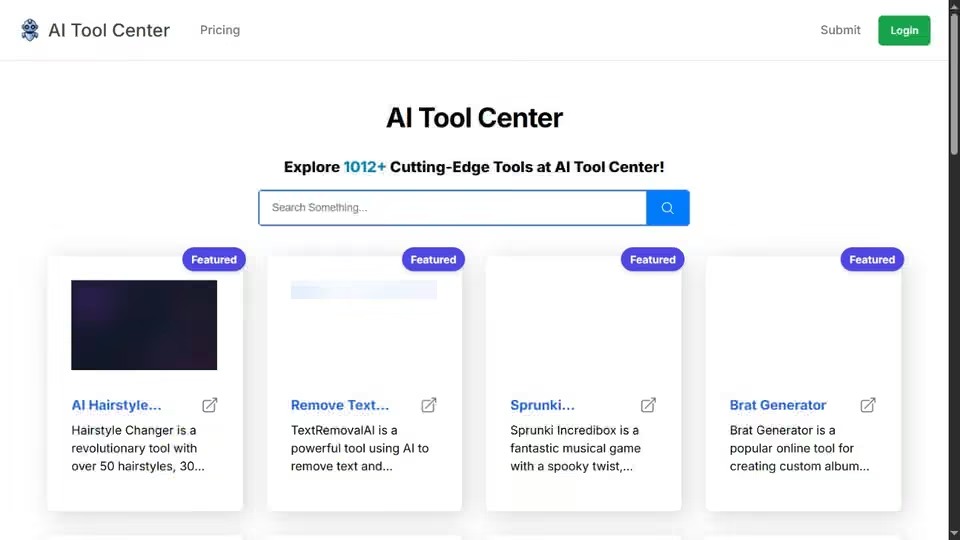
AI Tool Center is an AI tools directory and product showcase with featured entries and category-based browsing. It offers a context for applications that can demonstrate a practical AI feature, rather than only using AI as a broad label. A short product introduction should identify the task, intended user and reason to inspect the full website. For a marketing product, that may be assistance with content, workflow configuration or understanding activity, depending on the actual capabilities.
The free plan we reviewed stated a five-to-seven-day review window, an ongoing backlink obligation and a limited period for free updates. Paid plans changed the review timing and removed or expanded parts of that arrangement. Treat those advertised benefits as plan conditions to confirm in the live application, not as evidence that a product will necessarily be accepted or receive a particular amount of traffic.
Authentication and backlink verification are separate steps. An active account does not establish that the badge is in an accepted location, and a page in a resources guide should be tested where the form allows it. Keep account credentials private and upload only public product materials. Explain any connected-device requirement or separate AI-provider charges in the listing when relevant. After approval, inspect the published profile, correct factual errors and measure actual referral quality before deciding how much ongoing attention the directory deserves.
Check the final submission step
Before submitting, confirm the required page for any badge and whether the directory verifies it again after publication. Record the confirmation and review estimate so you can tell a saved draft from an accepted submission.


